Skip to content Access Keys
Sidney Sussex College, Cambridge

LATEST NEWS:

Music for Pentecost

Home > College Life > Chapel > Choir

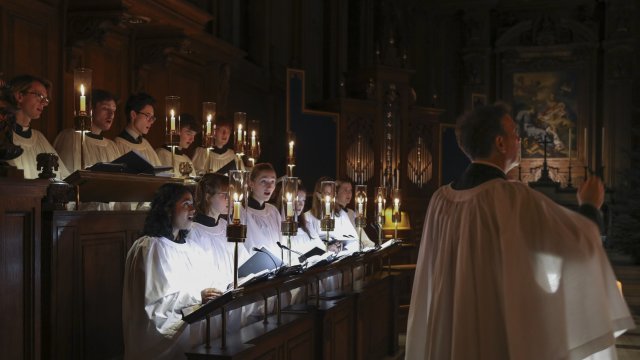
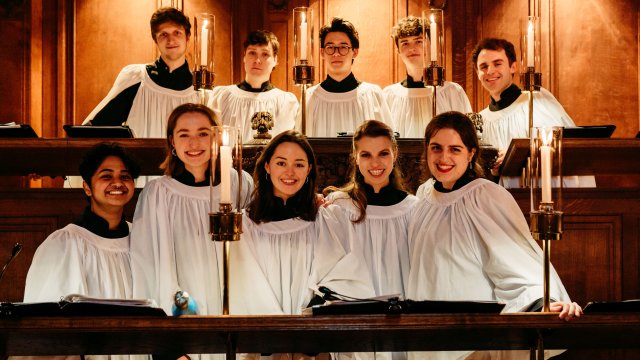
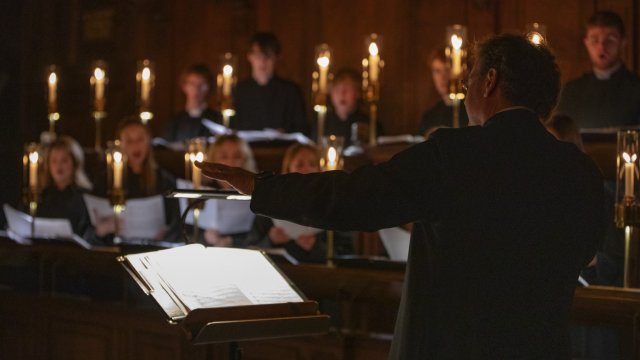
The Choir of Sidney Sussex College, Cambridge

choir
“The performances glow, as does one’s spirit after hearing them ... they sing with as much sensitivity and soul as many more famous rivals.”

– The Gramophone (CD of the Month & Editor’s Choice), Thomas Tomkins ‘These Distracted Times’

Music at Sidney Sussex

Sidney Sussex rose from the ruins of the Cambridge Greyfriars in 1596 and has long been a nest for professional musicians. Indeed the large chapel that stood on this site in pre-Reformation times was the regular venue for University ceremonies and was the venue where a number of early English composers took their degrees, including Robert Fayrfax (MusB, 1501; DMus 1504) and Christopher Tye (MusB, 1536). One of the earliest musicians in the College was the Royalist pamphleteer, author, and violist Roger L’Estrange (1616-1704), whose family were patrons of the composer John Jenkins. Earlier still, the great Elizabethan composer William Byrd would have been well-known to the foundress, Lady Frances Sidney, and indeed two very fine elegies by Byrd survive for her nephew, the poet and courtier Sir Philip Sidney. Currently resident in the College is Dr Christopher Page (1991), founder and former director of the multi-award-winning Gothic Voices, and Dr David Skinner (2006) who is a co-founder of The Cardinall’s Musick, director of Alamire (www.alamire.co.uk), and Sidney’s first Director of Music.

The College prides itself in being an open and friendly environment for music-making at a very high level among those reading a variety of subjects. In addition to organ and choral scholarships, the College awards a number of music bursaries annually, including one for choral composition (The Kennedy Pritchard Prize) and another for music performance (The Larkum Prize); there are also a number of dedicated trust funds available for a variety of music making in College, including the Powell Arts Fund and the Waldemann Family Jazz Fund. The College boasts an active Music Society which organizes weekly chamber recitals with guest appearances. Small-scale operas and musicals are often staged in the Master’s Garden in Easter Term.

The Chapel

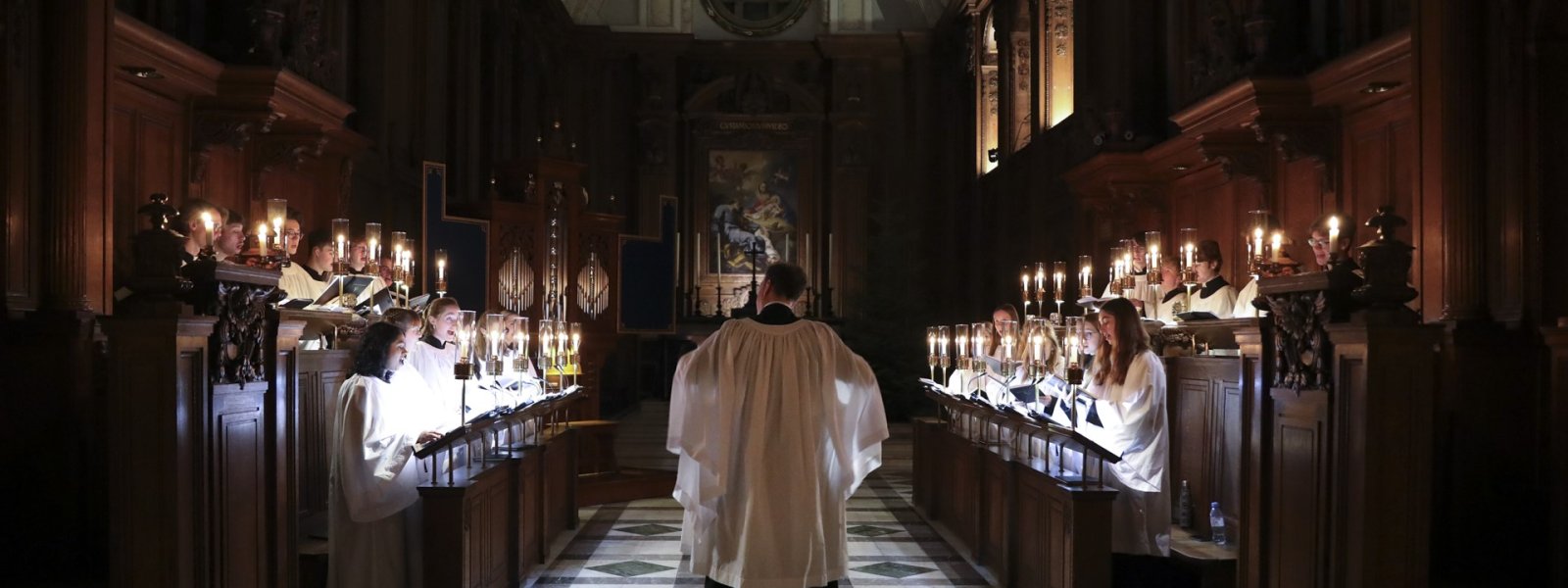
The chapel was constructed, following the wishes of our foundress Lady Frances Sidney, on a puritan design with the building running north to south (rather than the usual west to east), although was later extensively remodeled on a mock Jacobean (and, paradoxically, high-Roman) design with a mixture of marble and elaborately carved wood panels. The Chapel is well-known as the resting place of the head of one of its most notorious members, Oliver Cromwell, in a secret location in the ante-chapel. Today, like the College as a whole, it remains as one of Cambridge’s best-kept secrets, and is an excellent venue for choral and chamber music.

Choral & Organ Scholarships

The Choir is a major focus of College life, and is made up of six to eight sopranos, six altos (male and female), six tenors, three baritones, and three basses. We are seeking applicants from all voices types for entry in Michaelmas 2011 and Michaelmas 2012, up to a maximum of three per voice part for each year. The College has a junior and senior Organ Scholar (the current annual stipend is £450); there are two student organists in residence in any given year. Organ Scholars are provided with comfortable rooms with a piano, while the costs of organ and singing lessons are borne by the College. Choral Scholars receive an annual stipend of £100, free singing lessons, and occasionally take on roles as tour administrator or choir librarian (which has an additional stipend). Other ‘perks’ include free national and international tours, Choir formals, and a number of social events throughout the academic year. For further information, please contact the Director of Music (director.music@sid.cam.ac.uk), or visit the following websites:

University Choral Scholarships
University Organ Scholarships

The Commitment

Sidney is an ideal choir for those who cannot commit to a daily singing routine, but are still keen to make music at the highest level and take part annual tours and commercial recordings. The regular term-time commitments are as follows:

Sundays: 3pm rehearsal (for upcoming music) / tea break / 5pm rehearsal for 6.15 Choral Evensong
Wednesdays: 5.30pm rehearsal for 6.45 Latin Choral Vespers
Fridays: 5.30pm rehearsal for 6.45 Choral Evensong

Free formal hall is offered on Fridays and Sundays. Extra rehearsals are occasionally arranged at the beginning of the academic year, and for recordings, tours, and special College events.

Concerts, Recordings & Tours

The Choir regularly performs at home and abroad and, more recently, has made a niche in making professional recordings for specialist markets, including museums, art galleries, and national libraries. Their first recording with the new early music label Obsidian (www.obsidianrecords.co.uk), Thomas Tomkins ‘These Distracted Times’, was awarded Editor’s Choice and CD of the Month in the Gramophone, and they have since gone on to record and tour a number of innovative programmes. Activities for 2008 included a recording of the music of Ludwig Senfl with the early brass ensemble QuintEssential, which took place in Regensburg in Bavaria. The Choir has also recently toured California (2009) and Spain and Italy (2010). The Choir tours the USA once every three years, and our next visit is scheduled for 2012.

Repertoire

Sidney Choir performs a wide range of music from late medieval to newly commissioned works. The Choir excels primarily in music of the 16th century (the research specialism of the Director of Music) and the late 19th/ early 20th centuries, but endeavours to maintain a healthy balance of music from all periods. Choral and Organ Scholars are invited to offer suggestions for the termly music lists, and we often perform works written especially for the Choir by members of the Sidney community and beyond.

Singing & Organ Lessons

Choral and Organ Scholars are offered six singing lessons a term from one of our staff of three singing teachers: Ghislaine Morgan, Veronica Veysey Campbell and Nicholas Hurndall Smith. In addition, the Organ Scholars receive regular tuition on the organ and piano. The singing teachers also offer sectionals, and a termly masterclasses. All singing tuition costs are borne by the College.

The Instruments

The College has recently commissioned a new chamber organ from Taylor & Boody (for arrival in 2011), which will be of an elaborate Renaissance/early Baroque design with 7 stops tuned to an historical temperament at A=415, while the main organ will soon be replaced by a 30-stop, three manual instrument by the Dutch firm Flentrop (c.2015). The Chapel also possesses a Model D (full concert grand) Steinway, and other grands are situated in the Master’s Lodge and William Mong Hall. There are two historical square pianos which are used for 19th-century ‘Parlour’ evenings: a Clementi (1806) in the Master’s Lodge and a Broadwood (1826) in the New Parlour.

Mixing with Professionals

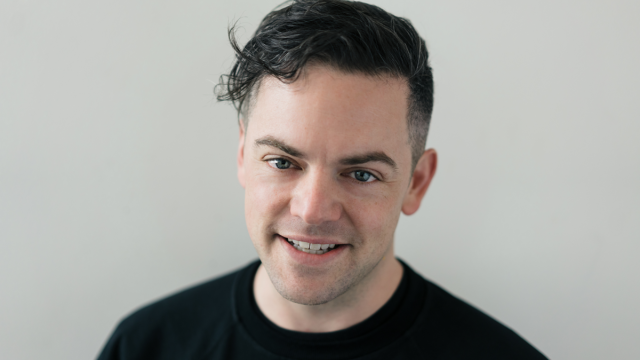
Sidney is one of the few colleges in Cambridge to host annually a professional musician or ensemble in residence. The first incumbent in 2007 was the viol consort Fretwork, and in 2008 we welcomed the gothic and renaissance harpist Andrew Lawrence-King. The College has recently elected the American composer Eric Whitacre to a Visiting Fellowship in Michaelmas Term 2010, when he will be composing new works for the Choir and working with us on a number of projects. The College also regularly spotlights a number of professional musicians who work alongside members of the Choir, and provide very useful connections for music-making in the wider world. Our next recording project (2011) will be the music of Thomas Weelkes, featuring our new chamber organ, Alamire and Fretwork.


CHAPEL PERSONNEL
The Osborn Director of Music

Director of Music

In 2006 Dr David Skinner was appointed as the first Director of Music at Sidney since the foundation of the College in 1596. He is known primarily for his combined role as a researcher and performer of early music, and is a co-founder of the award-winning ensemble The Cardinall’s Musick , with whom he produced more than 25 recordings during his time as co-artistic director (1989-2004). As a record producer he has been involved with a number of award-winning projects (including two Gramophone Awards and three runners up, Diapason d’Or, Deutche Schallplatten, and a Grammy nomination). He has also served as academic advisor and music editor for a number of professional vocal ensembles, including the Hilliard Ensemble, Tallis Scholars, The King’s Singers, The Sixteen, and several of the collegiate choirs in Oxford and Cambridge. From 1997 to 2001 he was a Postdoctoral Fellow of the British Academy at Christ Church, Oxford, and from 2001 to 2006 was the Lecturer in Music at Magdalen College, where he conducted Magdala the mixed-voice chapel choir. His current professional ensemble is Alamire , which exists as an extension to his research and performance activities, and in order to explore and promote the compositional processes behind the great masterworks, and lesser-known works, of the late medieval and early modern periods. He is also Artistic Director of the early music label Obsidian Records. Recent projects include a television documentary on the Office of St David for BBC Wales, and an Arts Council funded exploration of the music of Josquin Desprez within the medium of modern ’sound art’. Plans are afoot to exploit the multi-media experience of late medieval and early renaissance music in a three-part television documentary, currently under development. Dr Skinner has published widely on music and musicians of early Tudor England, and his most recent books include the collected works of Nicholas Ludford (Early English Church Music, 2003 & 2005) and The Arundel Choirbook (Duke of Norfolk: Roxburghe Club, 2003). He is currently editing the Latin church music of John Sheppard for publication in 2010, and co-authoring a book on music and the English Reformation.

The Chaplain

Chaplain

The Chaplain, Revd Dr Peter Waddell (chaplain@sid.cam.ac.uk), is available to be contacted by any member of the Sidney community on any matter of concern and at any time. Most days he can be contacted in his rooms Y1 (tel: 38837 email: chaplain@sid.cam.ac.uk). Alternatively, he can be reached via his pager 24 hours a day by calling 07659 105029 and leaving a message. Peter is not normally in College on Mondays.

Senior Organ Scholar

Junior Organ Scholar

Ben Atkinson is now in his final year reading music. He began his musical training attending the Birmingham Conservatoire Junior Department, from the age of 9. He initially trained as a classical pianist, and took up the organ in 2006, studying under Henry Fairs. He previously studied the organ in Cambridge with David Sanger, and is now having lessons with Stephen Farr, and continues to study piano with Christopher Elton in London. He performs regular recitals on both the piano and organ as a soloist and accompanist, and performed an organ recital in King's College Chapel last year.

This year, as well as being the senior organ scholar at Sidney Sussex, Ben is the King's Voices Organ Scholar, accompanying one service per week in King's Chapel. As well as having a passion for the piano and organ, Ben is very interested in musical theatre and conducting, and has recently attended the Canford Conductor's Course for the second year running. Last year, he conducted the Cambridge University Wind Orchestra, and is currently composing the original score for this year's Cambridge Footlights Pantomime.

Junior Organ Scholar

Dan Smith received his early musical training as a chorister in the chapel choir of Magdalen College Oxford, under the direction of Bill Ives, where he also had his first organ lessons from Richard Pinel.
At 15 he joined the Junior Department of the Royal College of Music, studying organ with Daniel Moult, in addition to playing piano and percussion, and singing in the Chamber Choir. The same year he became School Organist at Magdalen College School, playing in daily chapel services and regular concerts. During his last year at school, Dan was Assistant Organist at Exeter College, Oxford, where he accompanied Evensong every Sunday.

Recently Dan has travelled to Uganda, Sweden and Estonia with various choirs, and has accompanied the Magdalen College School Choral Society on tour in Veneto, Italy.

  • LATEST NEWS ...
  • MUSIC LIST AND TERM CARD NOW AVAILABLE.
  • DOWNLOAD THE LASTEST CHOIR PROSPECTUS
  • The internationally acclaimed composer ERIC WHITACRE was a Visiting Fellow at Sidney Sussex in Michaelmas Term 2010, and has just been appointed to a five-year post at Sidney as 'Composer in Residence'.
  • LIVE AT STANFORD UNIVERSITY: Listen to a You Tube clip of Howells' 'Salvator mundi', performed in Stanford University's Memorial Church on 30 June 2009.
  • NEW CD FOR CHRISTMAS: "A Christmas Carol", Victorian Carols & Readings from Dickens. Details to be posted soon!
  • Tomkins CD 'These Distracted Times' voted Editor's Choice and CD of the Month in Gramophone Magazine (the first Oxbridge choir to receive the accolade).
  • New Obsidian Records CD recorded in the monastic church of St Emmeram in the heart Regensburg. Music by Ludwig Senfl with QuintEssential cornetts and sackbuts and Andrew Lawrence-King on gothic harp.
  • Senfl


  • CHOIR PICS ...
  • Choir
  • Enjoying the sun in Chapel Court before Evensong.
  • Photo by Adam Nall
  • May Morning Madrigals from the Master's balcony in Hall Court.
  • Photo by Adam Nall
  • Rehearsing Senfl with QuintEssential cornetts and sackbuts.
  • Photo by Adam Nall
  • Pfligliano 5: a close harmony group from the Chapel Choir.
  • St Emmeram
  • Recording in St Emmeram Monestary, Regensburg.
  • Bavaria
  • Relaxing after recording sessions.
  • Levanto
  • Before going on in Levanto, Liguria.


Singing Teaching Staff

Ghislaine Morgan is in much demand as a singer, singing teacher, choir coach, adjudicator and lecturer. She has performed throughout Europe, India, Japan, and the USA.

Ghislaine read music at Oxford University where she continued her studies in piano and violin before going on to train in music education, and then as a singer at the Royal College of Music. There she was awarded the Sacher scholarship: “An exquisite soprano”……the recital was ” lifted into ecstasy”. (Musical Times)

Ghislaine sang regularly with many renowned groups such as The Monteverdi Choir, The Tallis Scholars and The Sixteen, as well as with the King’s Consort, The Richard Hickox Singers and opera choruses such as The Aix-en –Provence Festival Opera, The Bath Festival Opera and Opera de Lyon. She has appeared as soloist on recordings for the Arte Nova, Decca, EMI, Gimell, Naxos, Richmond and Regent labels. She was a member of the choir of St. Bride’s Church, Fleet Street for 17 years but latterly has pursued her own individual career encompassing a wide variety of musical styles.

Solo engagements include a tour of South Africa singing Mahler’s Das Knaben Wunderhorn; recording the title role of Handel’s Deborah for German radio; concerts for the Mathieson Music School Calcutta International Festival, the Tel Aviv Festival for Vocal music, and the Sligo Festival of Baroque Music; and collaborations with Ballet du Nord. Ghislaine’s repertoire list embraces Monteverdi’s Vespers to Finzi’s Dies Natalis, Mozart’s Mass in C Minor to Canteloube’s Songs of the Auvergne. According to demand she has appeared as a washing machine, impersonated a caveman, sung opera from under a tablecloth and tongue trilled in an Indian garden.

Ghislaine’s educational work is inspired by a passion for encouraging others to be expressive with confidence, together with a desire to demystify vocal technique so that it can be both fun and simple to learn. She has a private practice in London, teaches at Cambridge University, and also at Dulwich College, from where she trains trebles for the national opera houses. She is engaged as a coach for choirs throughout Britain and Europe and has directed workshops in Britain, Iceland, India, Italy, The Netherlands, Portugal and Spain. She is an active member of the British Voice Association and is on the faculty of the Corso Internazionale Corale di Rimini and the National Youth Choirs of Great Britain. Ghislaine is the founder/director of the Sintra International Singing and Choral Conducting Course.

Nicholas Hurndall Smith read Music at Corpus Christi College, Oxford, where he was organ scholar, and then went on to study with David Pollard on the Guildhall School of Music & Drama’s Opera Course, supported by The Leverhulme Trust, The Worshipful Company of Salters and The Worshipful Company of Tobacco Pipemakers and Tobacco Blenders.

He began his career with a Rodney Milnes review in Opera Magazine: “The tenor Nicholas Smith shone especially brightly, a most accomplished actor as well as an inventive singer” and he has since been described as “Wonderfully manic” in London’s Metro and the Times wrote of “The delightful cameo of Nicholas Smith’s servant Arv”. Other roles include Lurcanio, Snout and Don Curzio for English Touring Opera, Flute and Tamino for Longborough Festival Opera, McHeath and Flute for Opera Project, Ecclitico, Sellem and Normanno at Iford Arts and Lysander for British Youth Opera.

Of his concert work the Daily Telegraph wrote “A refreshingly mellow tenor” and the Financial Times of his “Rapt and devout delivery”, and he has sung the arias in Bach’s St John Passion at the London Handel Festival, Bach Cantatas 63 and 65 with the Academy of Ancient Music, Schubert’s Winterreise at St. Marien Spandau, Berlin, the title role in Carissimi’s Jonah in the BBC Proms, Bach’s Christmas Oratorio in Kristiansund, and the Evangelist in Bach’s St John Passion in Jever. He recently sang the role of Coridon in Handel’s Acis and Galatea with Paul McCreesh and the Gabrieli Consort & Players in Vienna, Strasbourg and at the Wigmore Hall. He is in demand as a Britten soloist and has sung St Nicolas with the London Mozart Players, the Serenade for Tenor, Horn and Strings with the Haffner Orchestra, the Spring Symphony (c. Paul Spicer) at the Mary Wakefield Festival and the War Requiem with the combined choral societies of Cumbria.

He is a member of the highly acclaimed solo-voice ensemble I Fagiolini, with whom he has appeared throughout Europe, America, South Africa and the Far East as well as regularly on BBC Radio 3. His recording of Acis and Galatea in the role of Coridon with the Dunedin Consort was recently selected as First Choice Recommendation by Radio 3’s Building a Library.

Nicholas’ teaching is informed by his enthusiasm for the contrasting aspects of singing both sacred and secular music, both on the concert platform and on the operatic stage. He has a special passion for the music of Monteverdi which he has developed over the years signing with I Fagiolini both in concert and in their regular releases on Chandos.

Veronica Veysey Campbell teaches singing to choral scholars at Sidney Sussex and Christ’s College, Cambridge, at the Royal College of Music Junior Department, to the Choristers of St Paul’s Cathedral and she also has a busy private practice. She also teaches for the National Youth Choirs of GB, is Director of the Aberystwyth ‘Musicfest’ vocal course and is a tutor for Benslow Music Trust.

Veronica studied at Trinity College of Music and the Guildhall School of Music and Drama winning many singing prizes and was a finalist in the Kathleen Ferrier Memorial Scholarship Competition. She was also awarded the prestigious Worshipful Company of Musicians’ Medal. She has given many oratorio, concert and recital performances in Britain and overseas. These include appearances in the Snape Maltings Concert Hall, the Wigmore Hall and in many English Cathedrals and Festivals as well as on television. Although still performing, teaching has been her focus for many years.

Her pupils often take solos roles in leading venues, which have recently included Glyndebourne (roles of ‘Miles’ and ‘Flora’ in Turn of the Screw and their understudies in 2007, and in Albert Herring 2008) and solos in the Queen Elizabeth Hall, St. John’s Smith Square, the Barbican Concert Hall, and the Festival of Remembrance in the Royal Albert Hall. A former student has won a 2009 Brit award and was nominated for a Mercury Prize.

Veronica is a Director of the British Voice Association.

For futher information about Choral or Organ Scholarships at Sidney, please contact the Osborn Director of Music, Dr David Skinner (director.music@sid.cam.ac.uk).